

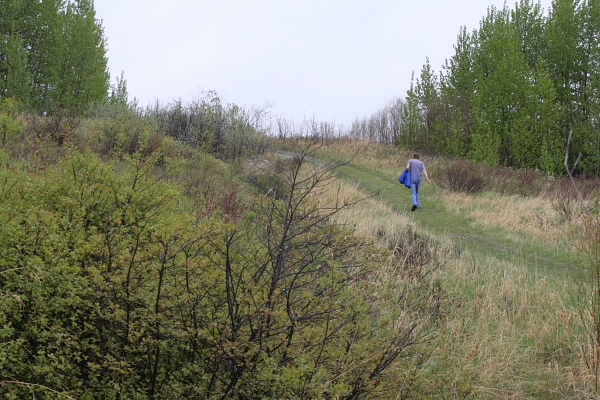
I was contacted by a PhD Student at the University of Calgary who is training to become a forest therapy guide. His research is on the use of nature in cancer care and he plans to provide some to patients and participants at Nose Hill Park. He intends to be mindful and have minimal human impacts on the land and the rough fescue grasses. He wants to avoid off-leash areas and others with a lot of thistles.
Forest therapy is a legitimate, research-backed wellness practice for reducing stress and improving mood, though it is considered preventive or complementary care rather than a medical cure. While forest therapy is a structured, clinical intervention aimed at specific health challenges, forest bathing is a general mindfulness practice for stress reduction. Calgary’s first official trail at Inglewood Bird Sanctuary was certified by the Association of Nature and Forest Therapy (ANFT). The loop offers 5 unique stations that guide you on a sensory exploration of this peaceful natural area. Community Walks are seasonal and guided 2.5-hour programs are in local wilderness spaces like Griffith Woods Park.
The Cumming School of Medicine (CSM) engages deeply with nature-based healing through Indigenous Medicine Walks and local health partnerships. The School integrates immersive nature experiences primarily through traditional Indigenous healing frameworks. Organized by the CSM Strategic Partnerships and Community Engagement office alongside the Calgary and Elbow River Healing Lodge, University of Calgary Medicine Walks take place at Nose Hill Park. Led by Indigenous elders, these walks guide medical students through the natural environment to explore the collection, application, and meaning of traditional plant medicines, blending medical education with ecological connectedness.
https://news.ucalgary.ca/news/medicine-walk
This article is for informational purposes only. For medical advice or diagnosis, consult a professional.
Anne Burke